

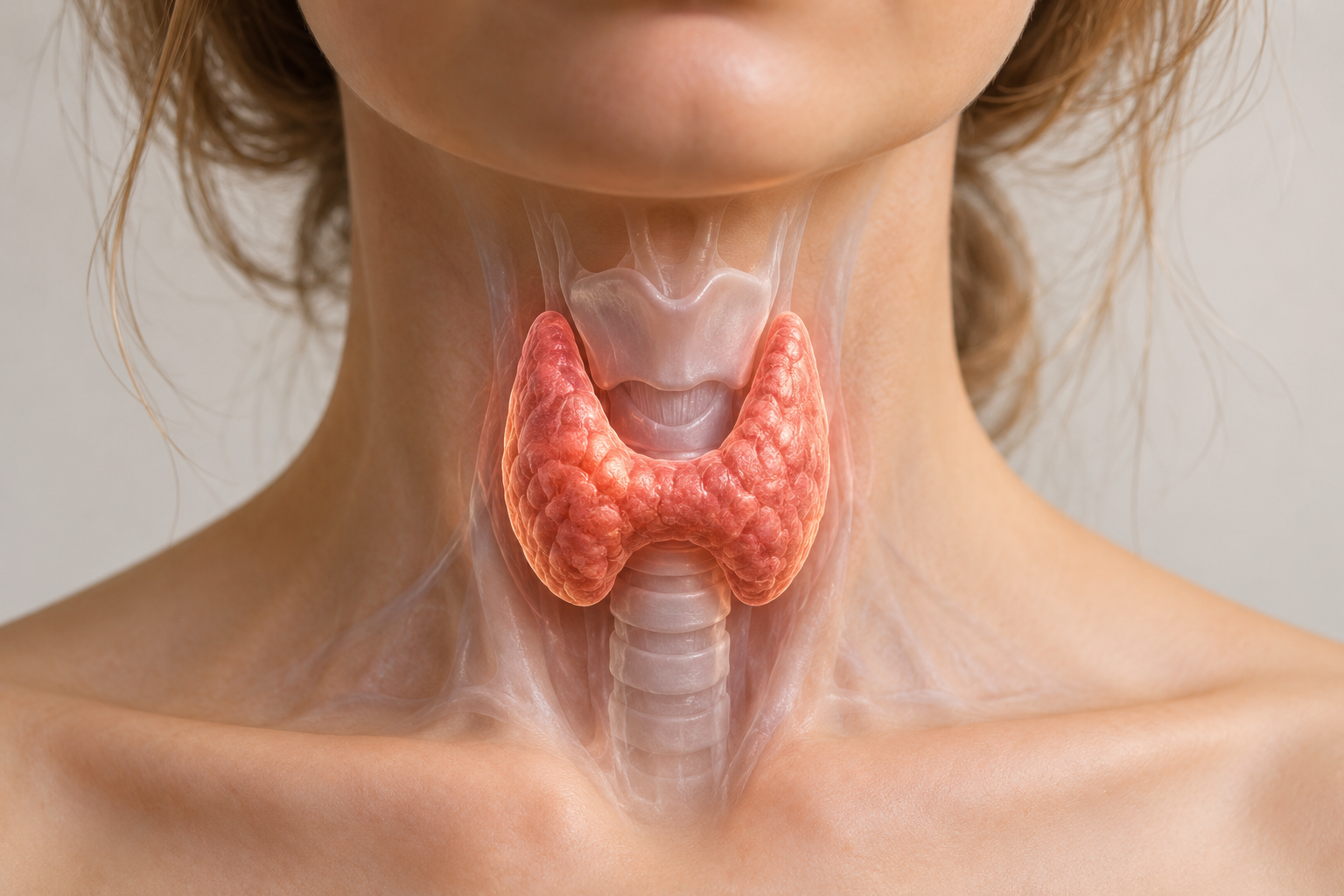
Your thyroid may be small, but it influences nearly every system in your body, including metabolism, energy production, digestion, cardiovascular health, brain function, and hormonal balance.
At Agapex in Park City, Utah, thyroid health is especially close to my heart because I've spent most of my life navigating it myself.
My Personal Journey With Hashimoto's
I was diagnosed with Hashimoto's thyroiditis at just 10 years old. For much of my life, I felt like I was navigating this complicated autoimmune condition blindly.
Hashimoto's is a strange and unpredictable disorder. In my 20s, my thyroid unexpectedly began functioning normally again, and I no longer needed medication! Although uncommon, thyroid function can fluctuate, and some individuals experience periods of normal hormone production.
Five years ago, discovering functional medicine changed my perspective. I began exploring autoimmune health, nutrition, and the interconnected systems influencing thyroid function. I also started low-dose naltrexone (LDN), and my thyroid antibodies decreased from 1,500 to 300 in just over a month! While this was my personal experience, LDN remains an off-label treatment with limited evidence for Hashimoto's.
My journey shaped how I practice medicine. I understand the frustration of experiencing symptoms that don't always align with laboratory results, and I'm passionate about helping patients better understand their thyroid health.
What Does Your Thyroid Control?
Thyroid hormones regulate several essential bodily processes:
- Metabolism and energy: Metabolic rate, mitochondrial activity, and energy utilization.
- Brain function: Concentration, memory, mood, and cognition.
- Cardiovascular health: Heart rate, cardiac output, and cholesterol metabolism.
- Digestion: Gastrointestinal motility and bowel function.
- Hormonal health: Menstrual cycles, ovulation, and fertility.
- Hair, skin, and nails: Healthy tissue growth and turnover.
- Muscle and bone health: Muscle metabolism and bone remodeling.
Hypothyroidism may cause fatigue, brain fog, weight gain, constipation, hair thinning, cold intolerance, and menstrual irregularities.
Why Look Beyond TSH?
Thyroid function involves three interconnected hormones:
TSH (Thyroid-Stimulating Hormone): Produced by the pituitary gland, TSH signals the thyroid to produce hormones and is the primary screening marker for thyroid dysfunction.
Free T4 (Thyroxine): The primary hormone produced by the thyroid, which the body converts into biologically active T3.
Free T3 (Triiodothyronine): The active hormone that binds to cellular receptors and regulates metabolism.
Although TSH is considered the standard screening test, I believe understanding the complete clinical picture is essential. Free T4 helps clarify thyroid function, while Free T3 may provide additional information in selected situations, although it isn't routinely recommended for diagnosing hypothyroidism.
At Agapex, we individualize testing based on symptoms, medical history, and clinical findings.
Could Hashimoto's Be the Underlying Cause?
Hashimoto's is an autoimmune condition in which the immune system attacks thyroid tissue and is the leading cause of hypothyroidism in the United States.
Two important antibody markers include:
- TPO antibodies (TPOAb): Help identify autoimmune thyroiditis.
- Thyroglobulin antibodies (TgAb): May provide additional information when Hashimoto's is suspected.
Antibody testing can identify autoimmune thyroid disease before significant hormone dysfunction develops. However, positive antibodies don't always require treatment, and negative antibodies don't completely exclude Hashimoto's.
Understanding Thyroid Medication Options
Treatment depends on thyroid function, symptoms, medical history, and individual response.
Levothyroxine (T4)
Available as Synthroid, Tirosint, Levoxyl, and generic formulations, levothyroxine is the recommended first-line treatment for most patients. The body converts T4 into active T3.
Liothyronine (T3)
Also known as Cytomel, liothyronine provides synthetic T3. It may be considered alongside T4 in selected patients with persistent symptoms, although studies haven't consistently demonstrated superior outcomes. Careful monitoring is necessary to avoid excessive T3 exposure.
Armour Thyroid and NP Thyroid
These porcine-derived desiccated thyroid medications contain both T4 and T3. Some patients prefer them, but their T3-to-T4 ratio differs from human thyroid secretion. They are not FDA-approved and are generally not recommended as first-line treatment.
Nutrients That Support Thyroid Health
Several nutrients contribute to thyroid hormone production and metabolism:
- Iodine: Essential for T4 and T3 synthesis; excess can worsen Hashimoto's.
- Selenium: Supports T4-to-T3 conversion and antioxidant protection.
- Zinc: Contributes to thyroid hormone metabolism and immune function.
- Iron: Required for thyroid hormone synthesis; deficiency can cause fatigue and hair loss.
- Vitamin D: Supports immune and bone health, although it hasn't been proven to reverse Hashimoto's.
- Vitamin B12: Supports neurological function; deficiency can mimic thyroid symptoms.
The goal is to identify and correct deficiencies rather than routinely recommend high-dose supplementation.
Personalized Thyroid Care at Agapex
Thyroid health involves more than a single laboratory result. Understanding hormone production, autoimmune activity, nutritional status, and individual symptoms helps guide appropriate treatment.
My experience with Hashimoto's has taught me that thyroid health isn't always straightforward. Every patient deserves to feel heard, understood, and supported.
Experiencing fatigue, brain fog, hair thinning, or persistent thyroid symptoms?
Schedule a thyroid and functional medicine consultation at Agapex in Park City, Utah, and take the next step toward understanding your thyroid health.
— Dr. Kaleigh France, DNP, FNP-BC
Co-Founder & Medical Director, Agapex